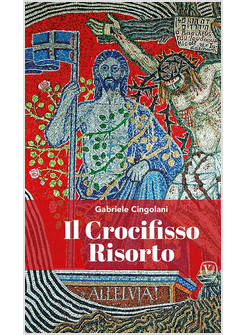
La vita cristiana è situata dentro la morte e risurrezione di Gesù Cristo, che è il mistero pasquale della nostra fede. È il significato del battesimo, di cui il catechismo dice che è immersione o innesto in Cristo morto e risorto. Non è possibile separare il Crocifisso dal Risorto, pena farsi un'idea inesatta della fede cristiana. Siamo salvati da un amore che, donando la vita per noi sulla croce, reca in sé la potenza della risurrezione. La nostra sequela di Cristo non è solo sequela del Crocifisso, ma del Crocifisso-Risorto. La croce che portiamo dietro di lui e con lui ci porta verso il suo stesso destino. Per questo anche in noi dolore e morte profumano di risurrezione.
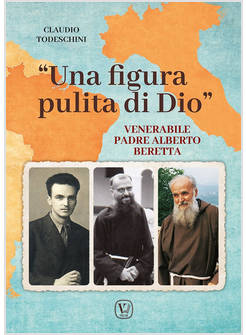
Con il Decreto sulle virtù eroiche il 14 dicembre 2023 papa Francesco ha dichiarato Venerabile il Servo di Dio padre Alberto Beretta, frate cappuccino appartenente alla Provincia di Lombardia, missionario nel Nord Est del Brasile, medico, fondatore e animatore di un ospedale nella città di Grajaú nello Stato del Maranhão. Per questo evento, il presente volume, dovuto alla passione e accuratezza di fra Claudio Todeschini, vicepostulatore della causa di canonizzazione di padre Alberto intende ripercorrere il "filo luminoso" delle virtù di padre Alberto, fatte oggetto di meticolosa indagine nel processo di canonizzazione, sul cui riconoscimento si basa appunto il Decreto di venerabilità. Questo "filo" viene ripercorso facendo tesoro soprattutto di testimonianze dirette, tratte da scritti di padre Alberto, come pure raccolte da familiari, confratelli e altre persone a lui vicine.
L'indagine su Cirillo e Metodio induce Dvornik ad affrontare, con il metodo storico critico, la questione del Primato Romano ascoltando le ragioni della parte bizantina. L'analisi storica sulla formazione del concetto di Basileia porta l'autore a sostenere l'iniziale condivisione da parte della Sede Romana della classica posizione bizantina circa il fondamento politico del Primato nella Chiesa e a negare qualsiasi fondamento storico al ruolo dell'Apostolo Andrea nella fondazione della Sede Costantinopolitana, al punto che anche il patriarca Fozio, la cui aspra controversia con Roma viene dall'autore sottoposta a profonda revisione storica, vi rimase del tutto indifferente. Il monumentale edificio eretto da Dvornik appare un gigante dai piedi d'argilla di cui si evidenziano in quest'opera le fragilità e le contraddizioni.
Atti del Convegno del Pontificio Istituto Orientale "Violenza dove antico dolore", Roma 10-11 Ottobre 2017 Il convegno Violenza dove antico dolore. Teologia come mediazione, dal racconto alla luce della vita, di cui questo volume raccoglie gli interventi, si è svolto al Pontificio Istituto Orientale nei giorni 10 e 11 ottobre 2017. Il giorno dopo, la visita al PIO del Santo Padre Francesco chiuse ufficialmente le celebrazioni per il primo centenario dalla fondazione dell'Istituto, voluto da Benedetto XV nel 1917. Proprio in occasione di questo centenario, si volle accogliere la sfida del momento presente e proporre un tentativo di produzione teologica, in risposta a una precisa richiesta pervenuta al PIO alla persona del Rettore D. Nazar S.I. In un incontro avuto con un vescovo armeno di Siria, padre Nazar si sentì rivolgere una richiesta esplicita: aiutateci a formulare una teologia che ci aiuti a pensare una risposta davanti alla violenza di chi vuole ucciderci: dobbiamo dire alla nostra gente "porgete l'altra guancia"? Oppure "imbracciate le armi e difendetevi"?
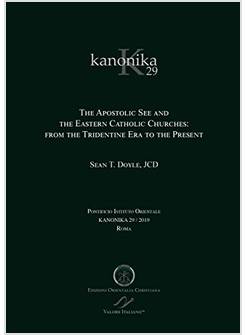
Roman Catholic theology experienced profound growth and development with the Second Vatican Council and since. With the renewal in scriptural, historical and ecumenical studies, open to new philosophical currents, and sensitive to diverse cultural contexts, Catholic systematic theology has undergone a remarkable evolution. The Church is societas sui generis, but vera societas “constituted and organized in this world as a society” (LG 8). That the Church is a true society is obvious to all who look at its history; but its specific nature is involved in mystery. In particular there is the relationship between faith, law and liturgy in the light of the classical adage Legem credendi statuat lex supplicandi. The Church is an adoring society. But the Church is also an acting society, and the adage should hold: Legem agendi statuat lex canonica.
The author is emeritus professor of the Pontifical Oriental Institute, Rome, where he has taught canon law, theology of law and philosophy of law. He has published several works in the series Kanonika, of which he was editor from the beginning till 2012. His recent publications include: Quest for the Historical Thomas Apostle of India: a Re-reading of the Evidence, Theological Publications in India, Bangalore 2008; “The Council in Trullo Revisited: Ecumenism and the Canon of the Councils,” Theological Studies 71 (2010) 651-676; “Christian Origins in India According to the Alexandrian Tradition,” OCP 77 (2011) 399-422; “Typology of Peter in the Symbolic Theology of Aphrahat,” OCP 80 (2014) 291-328; Renewal of Life and Law: An Indian Contribution (Dharmaram Canonical Studies, 10), Dharmaram Publications, Bangalore, 2015. His latest book is Covenant life, law and ministry according to Aphrahat (Kanonika series n.26), Edizioni Orientalia Christiana & Valore Italiano™, Rome, 2018.
In the present work the author studies how efforts at understanding the juridic relationship between the Apostolic See and the Eastern Catholic Churches over the past roughly five hundred years have led to the increased recognition of the juridic autonomy of those Churches. The work first focuses on the early jurisprudence concerning the binding force of papal legislation on Eastern faithful, highlighting an important though unapproved decision made by a particular congregation of the Sacred Congregation for the Propagation of the Faith in 1631, which declared that the popes did not intend to bind the subjects of the sees of the schismatic patriarchs by certain types of apostolic constitutions except in three particular cases. The work then reviews the jurisprudence of Pope Benedict XIV, who cited this decision three times in his writings; the events of the pontificate of Pope Pius IX, particularly those surrounding the First Vatican Council when the preconciliar commission on the Churches of the Eastern rite sought to suppress the praxis based on this decision; the period of the first codification of canon law, when this decision was reaffirmed in praxis; and, finally, the Second Vatican Council and the second codification period, when this decision became the basis for canon 1492 of the Eastern code. This study emphasizes the impact that the jurisprudence surrounding the 1631 decision has had on how the understanding of Eastern juridic autonomy has developed in the Catholic Church. It also shows how the current canonical norms impacting Eastern autonomy can be better understood in light of this historical development.
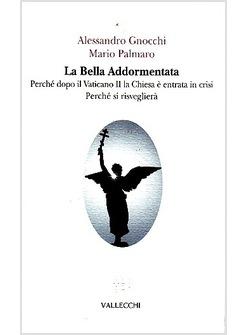
«Si credeva che dopo il Concilio sarebbe venuta una giornata di sole per la storia della Chiesa. E' venuta invece una giornata di nuvole, di tempesta, di buio, di ricerca, di incertezza».
Papa Paolo VI