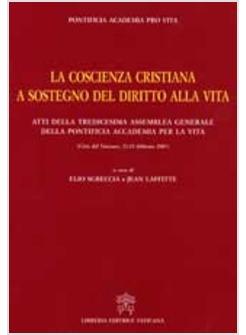
Gli atti della XIII assemblea generale della Pontificia Accademia per la vita (23-25 febbraio 2007) che ha coinvolto studiosi di fama internazionale provenienti da diversi Paesi ed un pubblico specialistico (420 presenze) dai cinque continenti. Tra le conclusioni redatte al termine del Congresso Internazionale indetto dalla Pontificia Accademia per la Vita nel 2007, era emersa la sollecitazione ad una mobilitazione di tutti coloro che hanno a cuore la tutela della vita umana affinché essa sia alla base delle azioni sociali. Ad un anno di distanza da quell'assemblea è quanto mai presente nel dibattito internazionale quell'urgenza di far sentire la voce cristiana in sostegno del diritto alla vita.
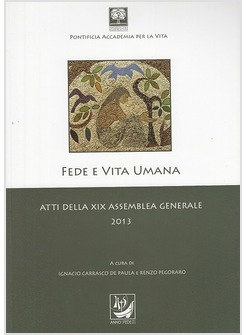
La pubblicazione, curata dal Presidente, S.E. Mons. Ignacio Carrasco de Paula e dal Cancelliere, Rev. Renzo Pegoraro, comprende tutti le relazioni, gli interventi alle tavole rotonde e i resonconti dei lavori di gruppo, è interamente in lingua inglese e consta di 168 pagine. Per ulteriori informazioni sul volume, si può contattare l'Accademia.
IL TESTO DEL DOCUMENTO E`GIA APPARSO SULL OSSERVATORE ROMANO NEL GIUGNO SCORSO. ORA ESCE COE PRONUNCIAMENTO FONDAMENTALE E UFFICIALE.
TUTTI GLI ATTI D INTERVENTO ALLA IV ASSEMBLEA DI CITTA DEL VATICANO DEL 23-25 FEBBRAIO 1998 IN EDIZIONE INGLESE. UN DOCUMENTO IMPORTANTE SULLA POSIZIONE IN DIFESA DELLA VITA DELL ETICA CRISTIANA NEL PROSSIMO MILLENNIO. Il volume contiene i risultati della riflessione scientifica dal forte carattere interdisciplinare che e`stata condotta nel corso dei tre giorni di conferenza in occasione della quarta assemblea generale della pontificia accademia per la vita. Si tratta di un lavoro svolto in comune dai diversi relatori e che conduce una riflessione etica sul futuro della biologia, della genetica e delle scienze mediche considerando i riflessi che un intervento sul genere umano" avra sulla "
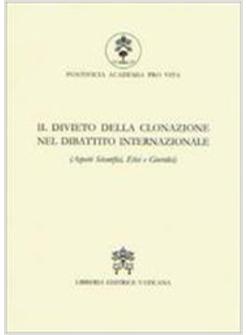
Un saggio approfondito su un problema estremamente attuale. Si discute molto sull'uso delle cellule staminali provenienti da embrioni umani, ottenuti per clonazione. In questi casi si parla di clonazione non riproduttiva ma terapeutica. L'ONU e da tempo impegnata in un dibattito relativo alla preparazione di una Convenzione che affronti il divieto della clonazione, mentre la Santa Sede ha gia fatto conoscere la sua posizione contraria ad ogni tipo di clonazione umana. L'Accademia per la Vita ripropone alcune riflessioni sull'argomento, per diffondere informazioni corrette e documentare le ragioni della posizione morale assunta dalla Chiesa.
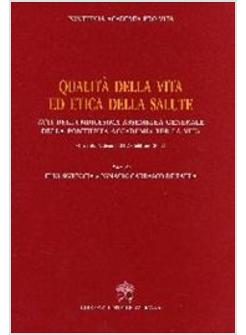
Atti dell'Undicesima Assemblea Generale della Pontificia Accademia Pro Vita (Citta del Vaticano, 21-23 febbraio 2005), editi da S.E. Mons. Elio Sgreccia, Presidente della Pontificia Academia Pro vita, e da Mons. Ignacio Carrasco de Paula, Cancelliere della stessa. Il tema posto all'attenzione del Congresso di studio, che, come ogni anno, ha accompagnato l'Assemblea Generale della Pontificia Academia Pro Vita, (quest'anno per la prima volta e stata aperta ad un vasto pubblico oltre che ai Membri dell'Accademia) ha messo in luce anzitutto un paradosso che e presente nelle nostre societa in fatto di qualita della vita e di salute. Il tema del Convegno e stato infatti il seguente: Qualita della vita ed etica della salute". L'argomento e stato analizzato da numerosi esperti alla luce dell'antropologia cristiana. Della presente opera la LEV ha pubblicato anche una versione inglese. "
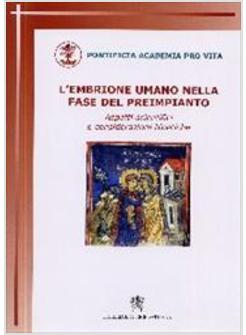
L'Accademia per la Vita affronta, nei suoi aspetti scientifici e bioetici, una delle questioni piu scottanti del mondo contemporaneo, esponendo ufficialmente il punto di vista della Chiesa. Il tema affrontato dalla Pontificia Accademia Pro Vita, ossia le tematiche riguardanti i primissimi giorni che seguono il concepimento, e oggi estremamente importante sia per le riercussioni sulla riflessione filosofica, antropologica ed etica sia per le prospettive applicative nell'ambito delle scienze biomediche e giuridiche.
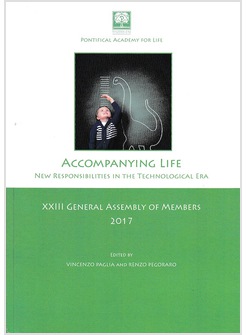
From the Preface by His Eminence Cardinal Pietro Parolin, Secretary of State of His Holiness
<This collection will also be helpful for the entire Church and for those who are interested in understanding how faith enlivens an ethical reflection on those previously unknown issues that history submits to us, so we may always face the new responsibilities that they entail. It is also an occasion to express my personal thanks to the Academy for its ongoing service in favour of human life in all of its stages in such a delicate and important frontier for today’s world, for the glory of God, the “Lord of life”>.
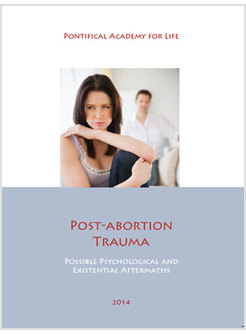
The collection of studies contained in this volume was born out of the widely shared awareness that having an abortion leaves remnants of a profound suffering, and which in not a few cases leads to real psychological damage. the problem of post-abortion trauma today is of both a scientific and human relevance and we can no longer ignore it on account of the enormous spread of abortion in many countries of the world.
We see that in the current state of things, the debate regarding the existence and characteristics of post-abortion trauma often appears to be conditioned by an ethical approach present in various cultures, an approach that can vary between considering abortion to be essentially a means of birth control (by now the most common) and condemning it as a severely grave violation of the sacredness of unborn human life. in many of the studies conducted up until our current day – the collection, analysis and interpretation of data – the results are strongly influenced by the position assumed prior to any undertaken research. According to some individuals, easy access to abortion is a kind of modern success and otherwise abortion is seen above all as the deprivation of the future life of a being not yet born. In the latter case it is easier to recognize, in addition to the harm done to the baby, the damage inflicted upon the woman which continues to unfold after the fact.
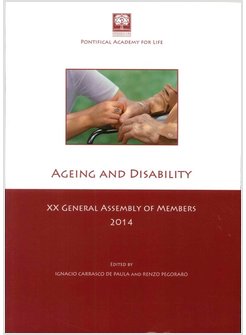
The increased life expectancy of the world population, due to better quality of life, hygiene-healthcare measures available to increasing numbers of people, and progressively expanding prevention efforts, raises new and serious challenges to which we must provide answers.
Greater longevity is also associated with an increase in morbidity with respect to other stages of life. In the elderly, these often manifest as multiple pathology, which complicate the situation of disability and dependence typical of old age.
Confronting this issue from a proper perspective requires solid ethical principles that allow the elderly and disabled to be treated as individuals in all their aspects, i.e. by respecting their dignity, providing human and material resources proportionate to their physical and psychological needs, and also facilitating the spiritual guidance that allows them to accept the loneliness, dependence, the disability itself and the event of death from a perspective of reason, which may relieve their suffering and open their hope to transcendence.
Dignity of the elderly and disabled
Post-modern society often experiences a distortion of the concept of human dignity. The influence of utilitarian theories and hedonist ethics leaves little or no room for the treatment and care of the disabled or elderly.
Dignity and usefulness often appear as closely related concepts, so that the first is inconceivable without the second. It seems that productivity (mainly economic) and the level of autonomy (applied in all senses) are what determine the level of personal dignity that might be attributed to someone.
An elderly person is increasingly more dependent and less productive, which would mean – if we hold to the above theories – a gradual loss of dignity that would make them less deserving of the resources allocated to their medical and psychological care, rehabilitation, daily assistance and spiritual guidance.
Unfortunately, this is not a new phenomenon in our post-modern society, and there are many sad events in history where man unduly takes it upon himself to decide who has dignity and who does not, favouring the former and penalising, enslaving or eliminating the latter.
While this is nothing new, the scale at which this phenomenon is occurring is, and is a challenge before which we cannot simply stand by and do nothing. Having dignity is peculiar to human beings, whether or not they are productive (in an economic sense). Having dignity is inherent to the person, whether or not they are dependent (even completely dependent). Therefore, considering the human person as a subject of dignity beyond their physical, mental or spiritual conditions is the opposite of that proposed by utilitarianism or hedonism.
Productivity, usefulness and level of well-being, postulates of post-modern society, turn the elderly and dependent into enemies. It is within this framework where arguments advocating euthanasia, eugenics and social marginalisation gather strength.
Similarly, there are more than a few elderly people who, endorsing these theories, try to live as if they were not old, i.e. sculpting their appearance to simulate the youthfulness of the past, adopting slogans that incite “dynamism” in old age, artificially promoting late fertility and motherhood (rather anachronistic), and even being pushed into experiencing youthful adventures, as a way of pretending what is not.
Old age, however, should be reclaimed as a stage, the last stage of life, which offers its own richness, not in any way inferior to the richness of other stages, just different.
dimensión espiritual en la vejez y la discapacidad trata la XXª Asamblea de la Academia Pontificia para la VidaIt is precisely in old age that the right circumstances occur to discover the value of human life aside from its productive capacity, client of consumerism or victim of hedonism.
The elderly man is a person, wiser than he was, and with a new perspective closer to looking towards transcendence. This, which the elderly have an opportunity to assess in their old age, is paradigmatic for the rest of society. The elderly and dependent bring awareness to the true value of existence beyond consumerism, productivity or the search for pleasure. This value is not the legacy of old age, though, but of wisdom, serenity of the mind, the perspective gained from experience and the need to provide answers to the basic questions of life: what am I? why am I? where am I going? why do I suffer? These represent a richness for all human beings, which the elderly person manifests with their dependent and limited way of living.
This stage can thus be defined as a prophetic time for every human being who, confronted with the purpose of their existence, is questioned about the meaning of their life, the hierarchy of their values and the urgency of their demands. Old age lays bare the depth of the person, who devoid of consumerist ties and pleasurable obsessions, asks himself in his solitude about his purpose and the reason for his existence.
Medical care in old age
Increased life expectancy in the elderly is changing the health care environment that they need. Living longer implies prolonging periods of dependence and increasing the likelihood that new chronic diseases will appear that complicate their care and require the dedication of major resources by healthcare systems.
Vascular diseases, hypertension, other cardiovascular problems, anaemia, eyesight and hearing problems, cognitive loss (especially memory loss), anxiety and depression, diabetes-related complications, obesity and smoking make up the framework of multiple pathologies that healthcare personnel must address in the treatment of the elderly.
Dementia cases are chronic and progressive in 30% of those affected, and only 10 % are reversible.
Alzheimer’s disease is one of the major causes of dementia in old age, and of death in people aged over 65 years.
In Italy, stroke is the second most common cause of dementia in the general population, and the third leading cause of death, after cardiovascular disease and cancer. Patients who survive these events show varying degrees of disability, which can make them completely dependent on a carer. This means a radical change in their lives, which will not allow them to return to their usual activities as normal.
Routine diagnosis of cognitive deficiencies in the elderly should be promoted to improve their treatment and future progress. Physiotherapy is a fundamental link in the chain of care for these patients, and should be properly coordinated with the other multidisciplinary interventions that will have to be adopted.
These situations of chronic disease are a challenge not only for the clinicians who must treat them, but also for carers, family members and professionals, who will require support and psychological-emotional training to enable them to confront very difficult and potentially long-lasting situations, in which the elderly or disabled person is cared for in a manner that their dignity as a person merits, by proper assistance, clinical support and spiritual guidance. The balance necessary in the way of caring for the elderly and disabled requires excellence in the quality of this care, which implies exhaustive exercise of care and attention to the anthropological complexity of the patient, in their physical, psychological and spiritual aspects.